A non-hierarchical organization where everybody can be heard — Charles Gorintin (Alan.eu)
Alan is the first health insurance of the digital era in France. Alan provides a simple experience for the health coverage of companies and independents. It was approved by Banque de France — ACPR, a first since 1986.
- Founded: 2016 by Jean-Charles Samuelian, Charles Gorintin
- City: Paris, France
- Funding: 12M€
- Company size at time of writing: 11 (hiring fast)
- Tech team: Everybody is basically full-stack
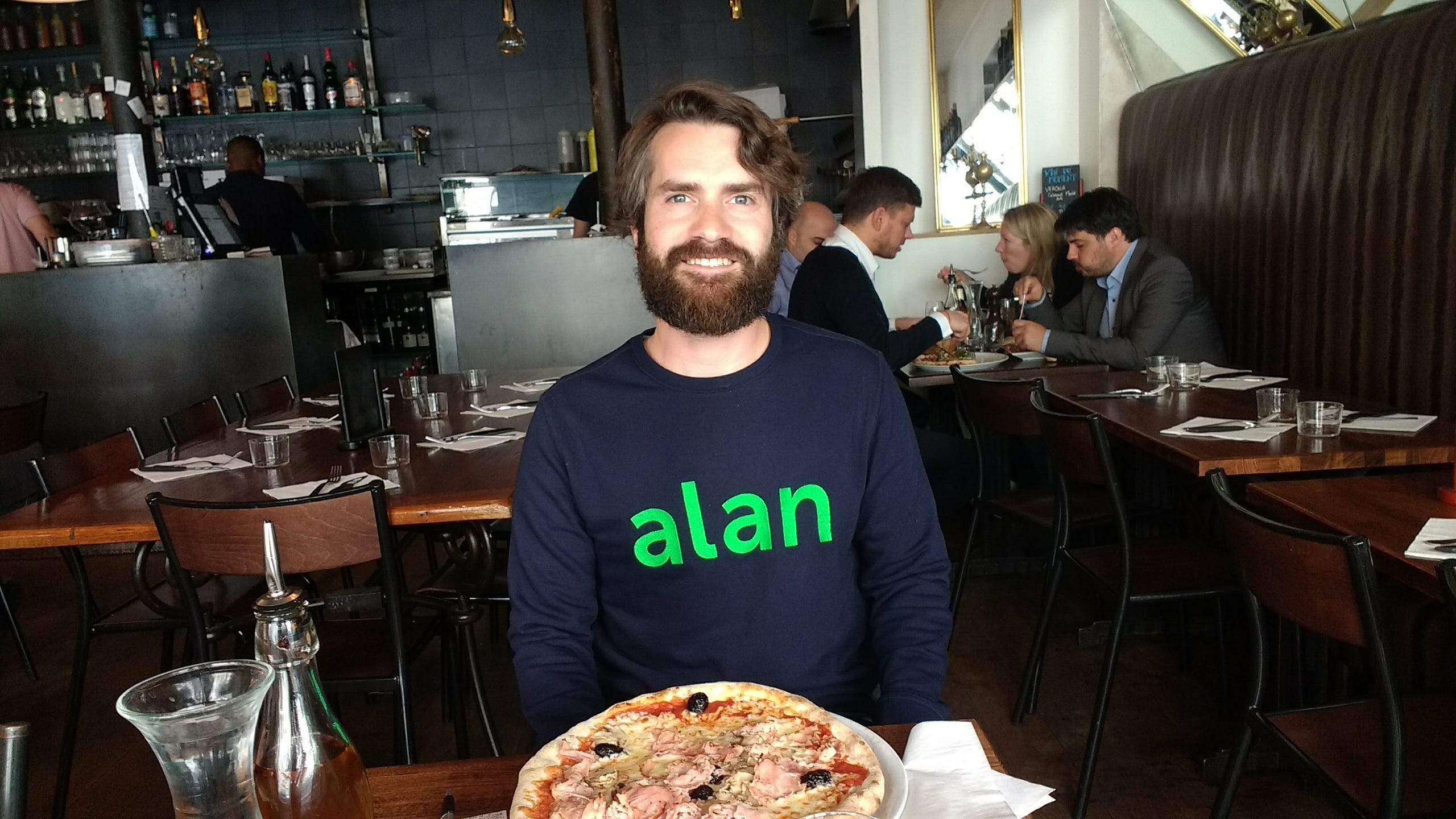
What’s on your pizza ?
Calzone at Lucky Luciano
Let’s see how it all started
In October 2016, we became the first independent company in 30 years to get the insurance accreditation in France!
Tell me a bit about what you were doing before
I’ve been really into maths and data my whole life, moving around between engineering and data science for a while. Went to Ecole des Ponts, and got a Masters Degree in Machine Learning at ENS. I then moved to Berkeley to study financial engineering.
I became a data scientist at Facebook, where I discovered and used awesome tools and datasets. I worked on fraud and spam detection projects, and on another project about improving compassion on Facebook.
I participated in building the first advertising platform for Instagram, and ended up being hired by Twitter to lead the Growth Data Science team. We made huge progress on the data tools and applications there.
Jean-Charles was finishing up with Expliseat. We had met 10 years ago during school (Ecole des Ponts) and started talking about Alan quite quickly.
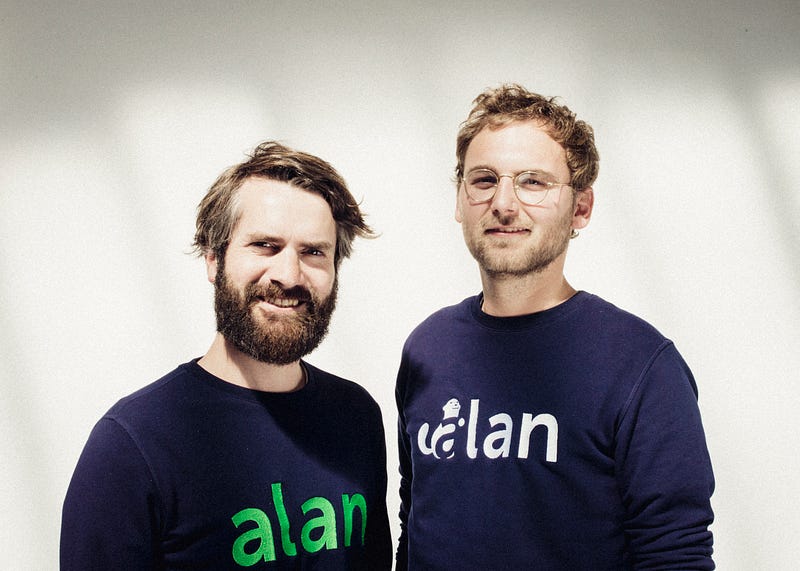
Charles (left) and Jean-Charles (right)
How did you start the company?
At the beginning, we were building small models to tell people when to go to the doctor, using public data. We had 3 possible distribution channels to spread the word: Individuals, health professionals or insurances.
The first 2 are fragmented markets, hard to reach and not ready to pay. So we tried to enter through insurances, which ended up being archaical and anything we tried would take years to roll out.
So we thought that we had a chance at becoming an insurance that worked at the speed of 2017. In October 2016, we became the first independent company in 30 years to get the insurance accreditation in France!
We started building the team in February 2016 and some big insurance names joined us pretty quickly — because it’s a great project in a very stale world. None of the founders were software engineers, so we had to hire people that were a lot better than us in web development and completely trust them. The hierarchy when it comes to that is almost inverted at Alan: we completely empower our employees to be the pillars of their job.
We try to build a network of strong people that fit together to build the best product. For that, we locked a significant portion of the capital towards stock options for the employees because investing in your team is the most important thing you can do.
Our goal is to change the way people handle their health, to simplify everything and add useful services like knowing up front how much health treatments will cost you. We need to share the vision with the entire team constantly to keep working with the best people.
How’s being the CTO at Alan?
I’m trying to create the best team to grow in a very sane way. I’m making sure everybody’s happy and will stay happy. We built a non-hierarchical organization where everybody can be heard.
I have 1 on 1 with the entire team weekly, but people also meet between each other. The goal is to create a network of skills where everyone is the lead when it comes to their core skills, and the rest of the team become helpers.
I’m basically here as a support to make sure all of that dynamic works smoothly, explore new perspectives and tools that we could work with or build — mostly data related, as it is my field.
Has your job changed since the beginning, even if it was just a little over a year ago?
It’s starting to change. For the moment, I still keep my hands on the code 50% of the time, but as the team grows my coding time will likely decrease to 20% — I want to keep coding because having the codebase in mind is important for problem solving.
I need to focus on the organization and helping people to be the best they can by expressing themselves. One thing pretty particular is that code reviews mostly don’t go through me — everybody needs to be heard, and the best person for the job does the code review, not the manager. We work in a team we can trust, and that asks for help if necessary, so no need to look over anybody’s shoulder.
A bit of tech
Taking a decision now on the best technology for a probable future might lock us down later
What’s your stack and why?
We work on Python with Flask. The rest is simple: PostgreSQL, and everything hosted on Heroku.
Python was an easy choice because we need data-scientists to be able to read production code. We won’t have scaling or performance issues, and the code and the business logic are quite clear in Python.
On the front-end, we use React. It was an obvious choice as the community is adopting it widely, we had expertise within the team, and we have ties to the React team.
One of our biggest challenges is to integrate with partners that have archaic endpoints in SOAP or similar. It’s sometimes a pain, but we have to!
Have you had to change your stack yet? Or will you?
Not really. If the data we handle starts weighing terabytes and Postgres isn’t enough, then we’ll think about something else.
Taking a decision now on the best technology for a probable future might lock us down later. For now, everything works just fine!
We’re thinking about the mobile part though, and for now are hesitating between native code or something like React Native. It will likely be the latter because the language is now mature enough for production.
Have you ever faced a crisis ? The site down, or something?
Tech-wise, not really.
We had a human crisis though: We hired a really good American developer, who moved to France for a while and moved back there quickly for personal reasons. This put a lot of constraints on the rest of the team (3 people at the time) who had to work like crazy for weeks after to meet deadlines that we had publicly announced.
So for 3 weeks, we worked during weekends and bank holidays until midnight pretty much everyday. That’s really something we want to avoid having to ever do again: it made us realize that public deadlines should be avoided.
Your life as a CTO
The key is automation and empowerment: Everybody should be able to do almost anything while being accountable for their actions, good or bad.
What’s your hardest challenge right now?
Growing the team and finding the right profiles. It got easier since we started getting some press, I must say. But now we need to scale processes and apply them in a way that keeps the team happy.
The faster people join, the faster everything needs to go.
Your most important responsibility?
Making sure people communicate. We have a very transparent culture, salaries are exposed and everything else is public to everybody in the team.
Communication allows people to teach each other and grow faster than they would alone.
Would you change anything you did since you started?
We’ve already made a switch: We moved to a “write everything” culture, instead of a “meet for everything” one. I have maximum 2h of meetings a week now, and it’s paradise.
All of our constructive discussions are through GitHub issues, even for non-technical people. It’s better than Slack because of the structure and the history — people actually think their arguments through before posting them on GitHub.
It also helps reference everything, we can go back to the discussion if there’s a grey area.
The key is automation and empowerment: Everybody should be able to do almost anything while being accountable for their actions, good or bad.
The people of Alan
Having 75% of a big cake is much better than having 100% of nothing
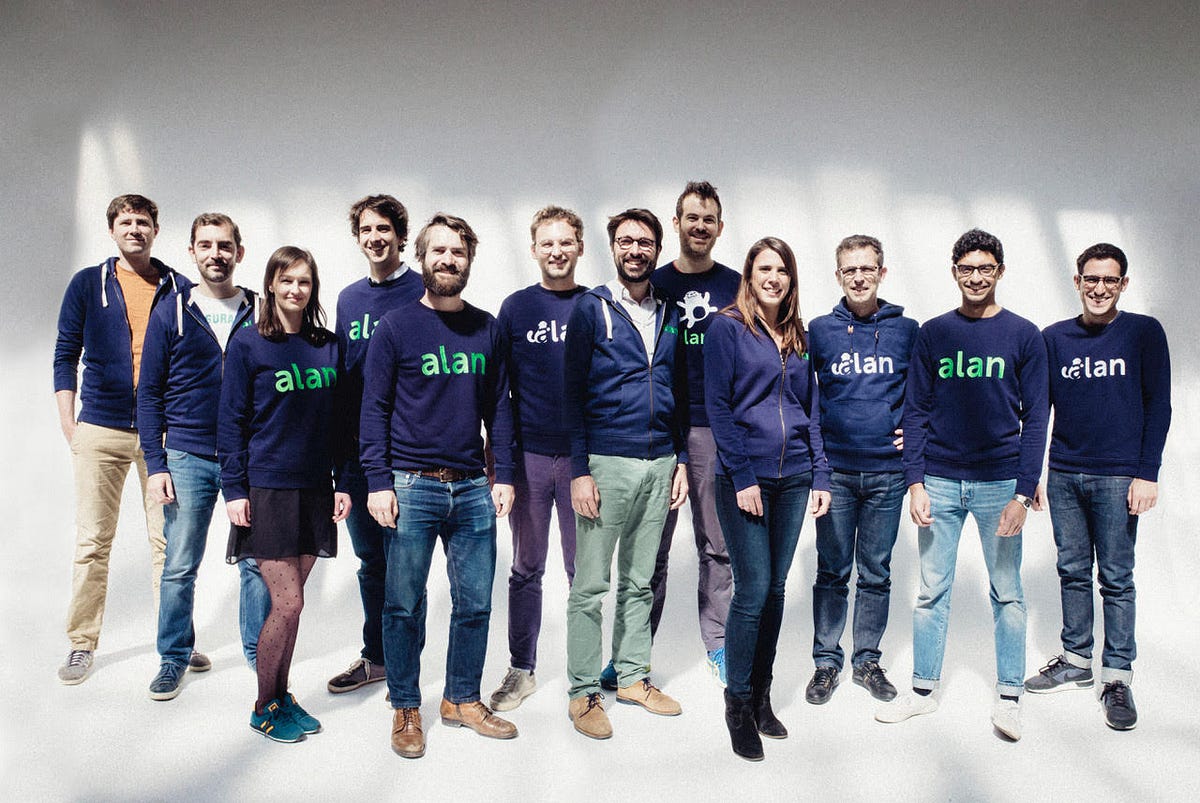
The team
Can you describe your tech team in a few words?
There’s Antoine, who worked on health applications for doctors at UCSF before. Rob used to work for Mixpanel in San Francisco. Daphné came from BlablaCar where she was lead engineer on monetization. Guillaume arrived from Toucantoco and Olivier from Banque de France.
The product team: Jean-Charles and Ed, who is a designer coming from Withings.
Anything you are looking for when hiring?
Motivation and mindset. You need to be able to ask for help when you are blocked on something and not take your ego into account.
The process at Alan: First interview to see if the person would fit in the company. Then we have one or two tech interviews, and the final one is a full day working with the team, as if they were employees.
We don’t need to judge if the person knows the stack, we need to see if they will ask the right questions. Not too many, but not too few either. We’re just trying to see if you know how to solve problems and stay humble about it.
For now we’re only hiring seniors, so impressive people can hit the ground running directly.
Any hiring tips for our fellow CTOs?
Don’t use freelancers. You want highly motivated people that get 100% involved in the project. And that’s why you need to share equity!
Having 75% of a big cake is much better than having 100% of nothing.
Vision
Where do you see Alan in 2 years?
Bigger team, and one of the big players in the field in France. Maybe being the leader in 3 years?
We’ll also start looking at the rest of Europe quite fast, and differentiate ourselves with a bunch of new services to become a full health management platform.
Your hardest challenges to reach that point?
We’ll face regulations issues for sure, as we manipulate sensitive data. We need to do things right with the government and different institutions.
We have to manage all our data on a certified hosting provider that can manipulate health data in France.
We’ll also have to find a way to scale the customer service the right way. For now we’re having a 1 minute response time by building tools and improving our product, but when you start having hundreds of thousands of customers, it’s a different challenge. We’ll need to grow while keeping our quality of service.
For now, engineers stay on call every 3 weeks on customer support so that they can stay up to date with the real pain points of the customers.
Another challenge that we’ll have tech-wise is that we want to build for the majority of the people, while some big corporations want to join in, and they can have very specific requirements.
- https://alan.eu
- https://angel.co/alan-25/jobs
- https://twitter.com/alan_assurance
- https://www.facebook.com/alanassurance
Stay up to date with the pizzas !