Keep moving while rebuilding the architecture — Thomas Seres (Pandacraft.com)
Pandacraft creates manual educational activities for children in the form of crafts, games, coloring, and storybooks.
- Founders: Edouard Lohse, Guillaume Caboche, Edouard Trucy
- Founded: 2013
- Funds raised: 3.6M$
- City: Paris, France
- Company size at time of writing: 25
- Tech team: 1 CTO, 1 data-tech (managing data warehouse), 1 full stack dev, 1 back-end, 1 intern
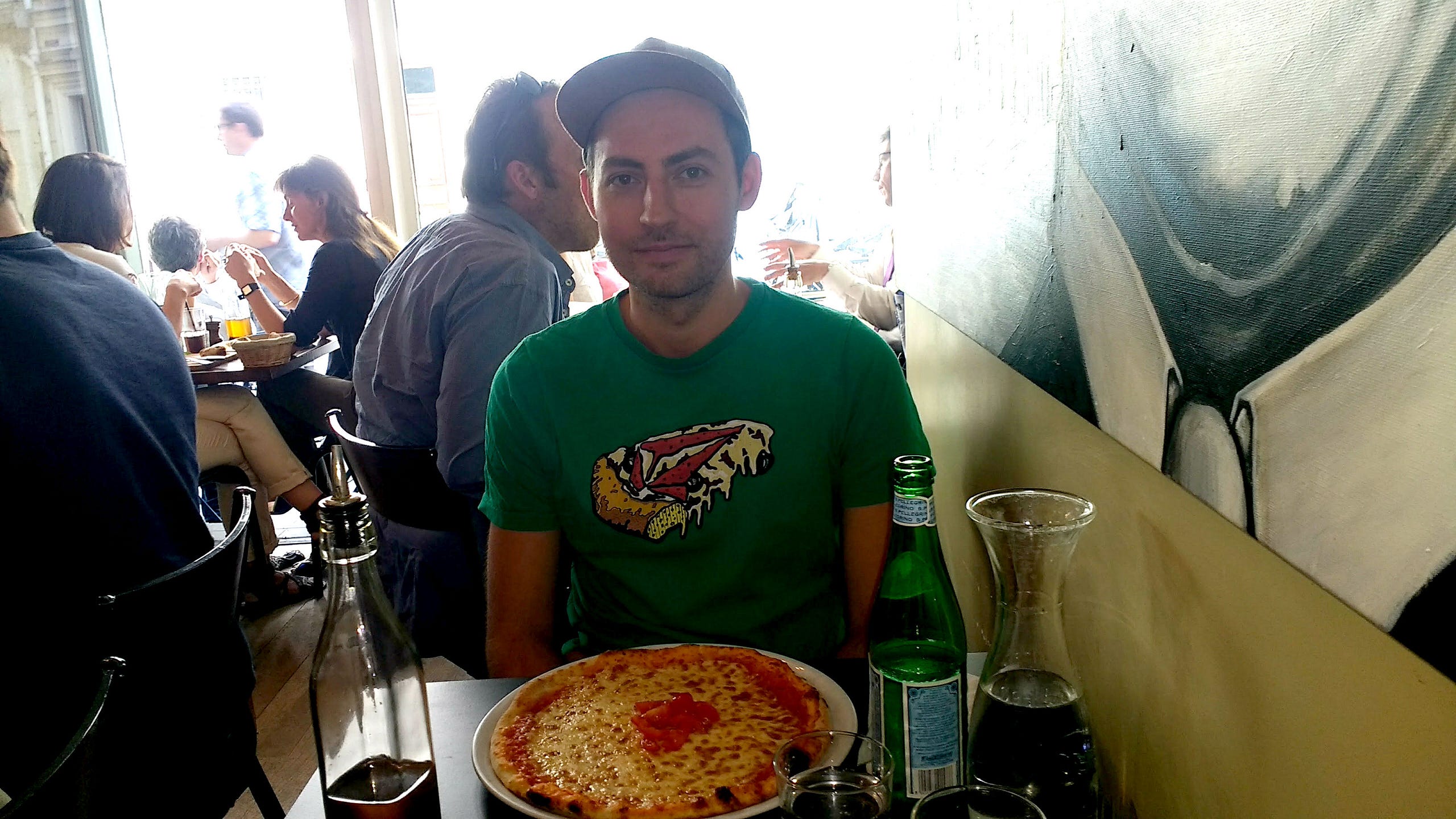
What’s on your pizza ?
Margherita: San Marzano tomatoes, mozzarella fior di latte, fresh basil, salt and extra-virgin olive oil at Lucky Luciano
Let’s talk about you first
What were you doing before Pandacraft?
I started coding at about 11 and always wanted to really understand what happened behind the scenes. I wasn’t really a school person, so I quickly went for an apprenticeship program through ETNA.
I worked for about 7 years for Evenium, an event management platform where I worked different positions, from project manager to business integration. I worked on tech, customer service and business development, it was a real 360 degrees experience!
How did Pandacraft start?
I met Edouard Lohse that was thinking about the project, and quickly after met the other 2 co-founders. We had a good feeling and I joined quite quickly.
For about 2.5 years, we worked on an offer that was quite different from what we now sell. From the start, we gathered a lot of data and quickly saw that our product was too big: too expensive & too long for the kids to play with. The package didn’t fit in a mailbox either, which doesn’t seem like a big deal but ended up being one for a subscription based service.
We started giving away a sequence of free starter kits to onboard people: we sent kits that we knew where high quality and made people happy about the service. Asos and Amazon came up with the fact that if somebody is happy with their 3 first purchases on your service, they have all chances to stay a loyal customer for a while.
It quickly became a logistical nightmare so we decided to stop and simplify with one starter kit, then directly the regular kit of the month.
We’re basically building everything internally, the physical kits, the media and digital products — we have an app and a media. We’re also automating integrations to other widespread points of sale like Amazon, Facebook or Pinterest.
What’s your job like now, 4 years after it all started?
My goal is to make sure everybody has a good vision of where the company is going and works hand in hand. We’re basically in a big melting pot with a very flat hierarchy, and we also tend to apply some concepts of Holacracy.
Has it changed since the beginning?
I spent the first 3.5 years alone on the tech team — so yes it changed quite a lot! The beginning was all about coding. Once the first MVP was out, we needed to make the product stay as close to the business’ evolutions as possible.
Now it’s a lot more diverse. My time is split evenly : 25% dev, 25% Business, 25% product and 25% team management.
Tech talk
We have built a few forecasting tools to manage our logistics and stocks to be able to predict if we are about to hit an issue
What’s the stack behind Pandacraft?
We started with a simple problem: we needed to sell stuff. So we went for Magento, which is now getting older, big and slow, and our needs are getting bigger so we’re migrating towards a microservice architecture piece by piece.
We’re building this new architecture with Ruby because we have people in the team already comfortable with it, and we’re thinking either VueJS or React for the front-end.
All of our infrastructure management is externalised — I don’t consider it part of our core job.
Have you ever had to change it?
It’s pretty hard to keep moving on the existing stack while rebuilding the architecture, but we’re managing. So we will add some machine learning components for lead-gen optimization, product recommandations, etc.
Nothing too clear yet in terms of technologies.
Ever had to solve a crisis?
Nothing that potentially could have harmed the company, but we did some small mistakes here and there for sure. A memorable one is when we deployed a migration script to production that billed 350 of our customers twice.
We have built a few forecasting tools to manage our logistics and stocks to be able to predict if we are about to hit an issue. So we are pretty solid on that part and any problem is usually easily recoverable.
The CTO life
My goal is basically to be able to disappear and see the team keep going as if nothing happened
What’s your hardest challenge, right now?
Keeping the pace on the product features. We keep refactoring, improving performance, etc. It’s also hard to find partners with whom to create synergies to ease the business.
It also takes effort to make sure that the tech team keeps a deep human spirit, and that everybody understands what they are working towards. This goes through structuring the team well enough so that everybody can learn from each other and build themselves.
My goal is basically to be able to disappear and see the team keep going as if nothing happened. And this can only happen through keeping a family spirit within the team.
Your most important responsibility in the company?
Making sure we never get wiped out of the internet. Malicious attacks, natural disasters or fire, we need to be resilient to all that.
So I work hard internally to make sure we enforce best practices in terms of security — strong passwords, 2FA, etc.
Is there anything you’d have done better, going back in time with what you know now?
2 years ago, I said that we needed 2 more tech people in the team (I was alone at the time) but I couldn’t find the right words to convince the rest of the team that the investment was needed.
I have monthly meetings with Henri Asseily (note: founder of Shopzilla) who questioned the size of the tech team compared to our product needs. He then helped us put in light — using graphs — how much a developer would cost us and how much revenue would be generated by an improved product, and that’s when we started hiring a team.
It can be hard to communicate your needs clearly!
The people at Pandacraft
Can you describe your tech team in a few words?
There’s a bit of everything: from calm, to dynamic, to kind of wacky. One of them loves baking cakes, so we sometimes get cake out of nowhere. It’s awesome.
Everyone has a specific domain for which they are the point of reference, and the rest of the team learns from them. It’s a healthy circle where everybody gets pulled forward by the team’s momentum.
What are you looking for during a recruitment?
I believe it’s best to hire somebody for a specific job. Then if that job is done well, there’s no problem whatsoever to move on to anything else you’d like to work on. The goal is to find people that can quickly learn new languages, get a high level understanding of where their project fits in the product and write scalable and robust code.
During an interview, we try not to oversell the startup spirit. We’re not telling people that we’re partying all the time because we’re a startup — we’re here to work first!
The last thing I’m looking at pretty intensely is the human fit. You can tell pretty quickly if there’s a good feeling with the team. We don’t have pure technical tests, as we mostly ask questions that show if you can understand the structure of a problem and think about something smart to solve it. Our entire interview process is technology agnostic.
Any hiring tip for our fellow CTOs?
Be honest with the candidate. You don’t want to oversell anything and end up with a mismatch. We got some great profiles that were not really interested before coming for an interview, and really got into it when they understood how transparent the entire company was.
Second thing is to really know what you need so you don’t close any doors when it comes to the profiles that you want to hire. You don’t always need only top developers from the top schools.
Vision of the future
Describe how Pandacraft will be 2 years from now
A lot more spread internationally, and cash positive — we’re almost cash positive but we’re investing heavily in marketing and hiring.
We’ll also have a lot bigger line of products, not only pointed towards the youth. The goal is to become a subscription-based service for a lot more things than what we currently do.
Any problems you will face to reach that point?
Internationalization can be a lot more complicated than it sounds: logistics, translations, regulations…
To be very honest we’re trying to follow a red line, but in a year everything can change! We’re planning on monetizing the media and making sure our customer satisfaction goes through the roof. There’s always a small percentage of unsatisfied customers, and we really need to know why.
Stay up to date with the pizzas !