Our business model can change every 3 months — Nicolas Silberman (Wellcut, 20Minutes, Mediapart…
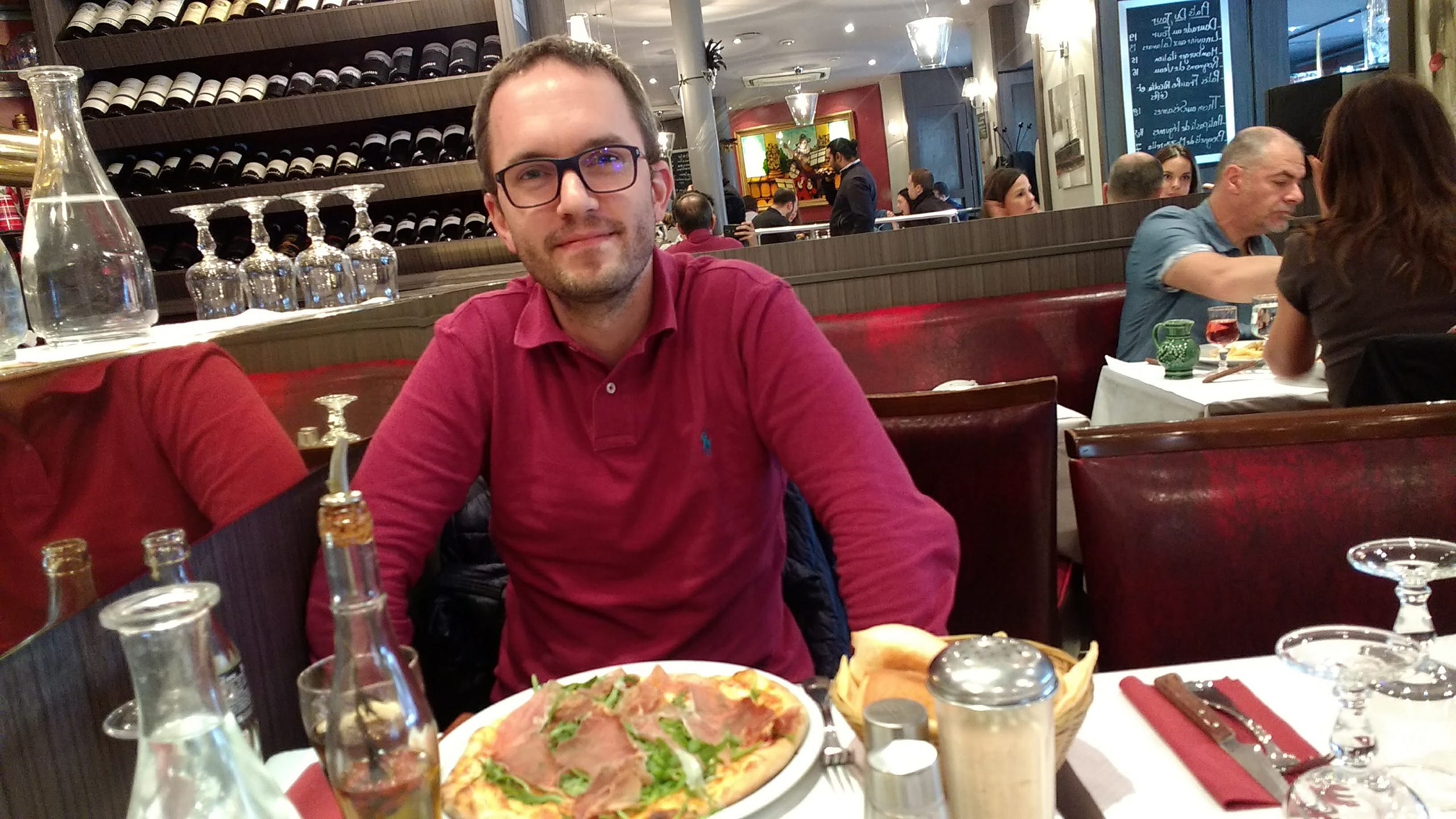
Nicolas was the CTO of two main french media sites during the past 10 years (20minutes and Mediapart) and has now founded Wellcut.tv, a platform that crawls video streams to find, cut and classify video extracts. He founded CTO Partners, a fund of the biggest french CTOs.
- Founders: Hélène Fromen, Nicolas Silberman
- Founded: 2016 after being CTO of 2 major French media (20minutes.fr and Mediapart)
- City: Paris, France
- Company size at time of writing: 6
- Tech team: 1 CTO, 1 Lead dev/deputy, 1 front-end, 1 back-end
What’s on your pizza?
Coppa, roquette, parmisiano at Pizza Arlecchino
Being a CTO
Our business model can change every 3 months so my job is to make sure we’re flexible enough to stay close to the business at all times
How did it all start for you?
I’m an autodidact — I’ve been into computers since I was a little kid, and built my first professional website (making money!) when I was 16. I started a company in the first internet bubble, after following a communication and project management cursus at school. I ended up being a project manager for AOL France, and I was basically the only person that had a good vibe with the developers because I really understood their job.
After 4 years there I got called by 20minutes when they still didn’t have a real website and were basically publishing PDFs of the magazine online. I arrived the same day than my now associate, Hélène. We were both there to make 20minutes the information leader on new media (meaning: the web).
Most of our competitors (like Le Monde) had about 7 minutes of publishing time because of their caching architecture. 20minutes wanted to be the first media to publish real time information, and we ended up dragging it down to a 30 seconds publication time. When you handle a media, any event can bring millions of users to your site in minutes — you need to be able to manage breaking news.
I then switched to CondéNast (Vogue, Wired, Glamour…) but the themes didn’t suit me too much, so I only stayed about a year and helped perform a big migration from ASP.NET to Symfony.
I then got hired at Mediapart by Hélène to give structure to the tech team. Mediapart is a paid media, so users were more exigent about the service that we provided.
I then followed an executive MBA at Epitech to get some management and business skills, as well as founded CTO Partners with a few people.
How did you start Wellcut?
We both left from Mediapart after having done our time there. The challenges became less exciting after a while so we left to become consultants to see other universes: it was great to realize how different things are between small companies and big corporations.
Hélène had the idea of building a web TV for live shows. This meant huge and long videos that nobody would really end up watching. That’s where the idea of finding a way to cut videos to show only the interesting content came up. We started in the free coworking space of NUMA, once a week until the POC was finished. We presented the first draft to a few mainstream media and raised some real interest, which made us switch from consulting to working full time on Wellcut pretty fast.
What’s your job now, after all this?
I have 2 jobs: CTO + HR/Administrative/Finance. I’m basically CTO + Managing director for Wellcut.
At 20minutes, I coded a little bit, but mostly managed people. I was project manager and the link between the tech team and the journalists.
At Mediapart, I didn’t code at all — I was mostly working on infrastructure problems and taking macro tech decisions.
Has you job changed in these different chunks of your life?
At Wellcut, I code a lot more than I used to in any other job. I’ve built the entire back-end of the POC, even if the main features now have been built by the rest of the team. Our business model can change every 3 months so my job is to make sure we’re flexible enough to stay close to the business at all times.
That’s why we deployed microservices and API Gateways, to stay as flexible as possible.
Tech concerns
Everybody in the team is and should be able to work on several languages
What’s your stack and why?
We have a lot of different chunks:
- PHP7/Symfony 3 for the site and anything internal
- Go 1.6 for the content API and user’s management
- Python for publishing tools and user’s activity tracking on the mobile app
- Video encoding is done in Java
- And we have a Chrome extension as well as a media API in NodeJS
Basically, we just pick the best language for whatever we need to build. It’s fairly harmless with microservices — for example, Go is awesome for asynchronous video processing and parallel tasks. Everybody in the team is and should be able to work on several languages.
Have you had to change your stack in any of your experiences?
At Wellcut, we try to update anything as soon as possible. I had too many experiences with old applications that were just impossible to upgrade because they skipped so many versions, that it’s a red flag for me every time now. Upgrading is pretty easy with a good tests coverage!
At Mediapart we had a pretty hard failure trying to move from Drupal 6 to Drupal 7. We ended up not doing it because it was too costly.
Have you every faced a crisis? A site down during elections time or something like that?
20Minutes: We had a complete breakdown of the database the day the results of some municipal elections were announced. The search engine had a faulty query that just killed the servers.
We also had one time when an unfortunate human error deleted all the images from the site. We had to go through the cache to get them back…
Mediapart: We got hacked pretty badly during my time there. 1% of our members’ banking information leaked. We didn’t hear from the attackers but spent a lot of time with the police, and even more time for weeks later to read every line of the code to make sure holes were being filled and nothing suspicious stayed around. It was a hard moment because the leak was historical, so nobody could really take the blame but I led the tech team, so I had to take it.
Daily life
My first hire was a friend of mine. He has left since, and is now my friend again.
What’s your hardest problem right now?
Processing data and video streams, and trying to get a cognitive analysis system running. We have audio and video analysis on the roadmap, which is not something to take lightly.
What is and were your most important responsibilities in your last adventures?
- Wellcut: Manage finances and stay up to date with anything linked to video processing and tools that might help us stay ahead of the game
- 20minutes: We constantly lived under the threat of suddenly having 2 millions users rushing to the site because something happened. And that’s exactly when you don’t want to be down. My job was to make sure the architecture was robust enough, even if the site was simpler than it is now.
- Mediapart: With paid users, things are a quite different, they cut you a lot less slack. My job was to make sure the architecture was solid, and the site had a quite complex history when it came to availability and performance, which were sensitive areas. I was also making sure anything financial would work flawlessly (credit card processing, etc)
Would you change anything you did in your jobs?
I have three mistakes that come to mind, and all are related to hiring.
My first hire was a friend of mine. He has left since, and is now my friend again. We had awesome moments, but having a hierarchical relationship with a friend is a very, very slippery path.
I also overlooked the quality of the work of an intern and confirmed him on CDI (long term contract). At the time I only viewed the positive side of him, and didn’t realize it would not work long term.
I also hired a tech genius that was just too good for the job. He was a coding beast and left after a month because he just didn’t fit with the rest of the team. But team cohesion is much more important than having one superstar.
The people you work with
Can you describe your current team?
My deputy Simon Rolland and me are really complementary, and he’s a lot more serious than me when it comes to code reviews. The team in general tends to joke around a lot. Mélanie comes from EPITA and brings her tech freshness, right from school. Dante, our front-end developer is Spanish and did not speak French when he started! Now he’s quite good at it.
We just don’t have enough beer because we have too much work.
The main thing you are looking for when hiring?
Curiosity, and drive to learn. Then motivation comes into play, and only then the technical skills. I can spot quite quickly from the cover letter and the first phone screen if somebody fits the company spirit or not.
Our technical test isn’t locked down to a specific language, you can work on whatever you want but we will ask you to explain your code after.
Any specific hiring tip?
Make sure the candidate really adheres to your project, even more if your company is small. When you hire your first developer, you don’t realize that he or she might not be able to become a CTO later because they don’t have clear product vision or might not be a good manager.
So keep in mind that you might need to hire a CTO later, and that it can create frictions due to the ego of the developer that was there before. So try to find somebody who is capable of receiving and giving constructive criticism.
What will be your hardest problems in the future?
Money! Being in a startup is different than in a leading media on this level. We need to build an audience and legitimacy, and that will come from a clean, well organized and qualitative content base.
We’ll also have to work on a good B2B model, because we have a great technology that will become even better, but we need to do something with it. And in all honesty, I think we’ve found something… :)
- https://twitter.com/nsilberman
- https://www.wellcut.tv
- http://www.20minutes.fr/
- https://www.mediapart.fr/
Stay up to date with the pizzas !