There are 3 types of CTOs — Clément Sauvage (Les Tontons Livreurs)
Since the beginning of 2015, “Les Tontons Livreurs” (pronounce it “a la French”), offers an high quality adaptive “Man With a Van” on-demand service. Through a website, hotline or iOS/Android app
- Founded: 2015
- Founders: David Morley, Clément Sauvage
- Funds raised: In progress, expecting to announce in September 2017
- City: Paris, France
- Company size at time of writing: 7
- Tech team: 1 CTO, 2“alternating*” students — 6 people in September
’Alternance’ in France is a way for students to keep studying while working in a company part time.
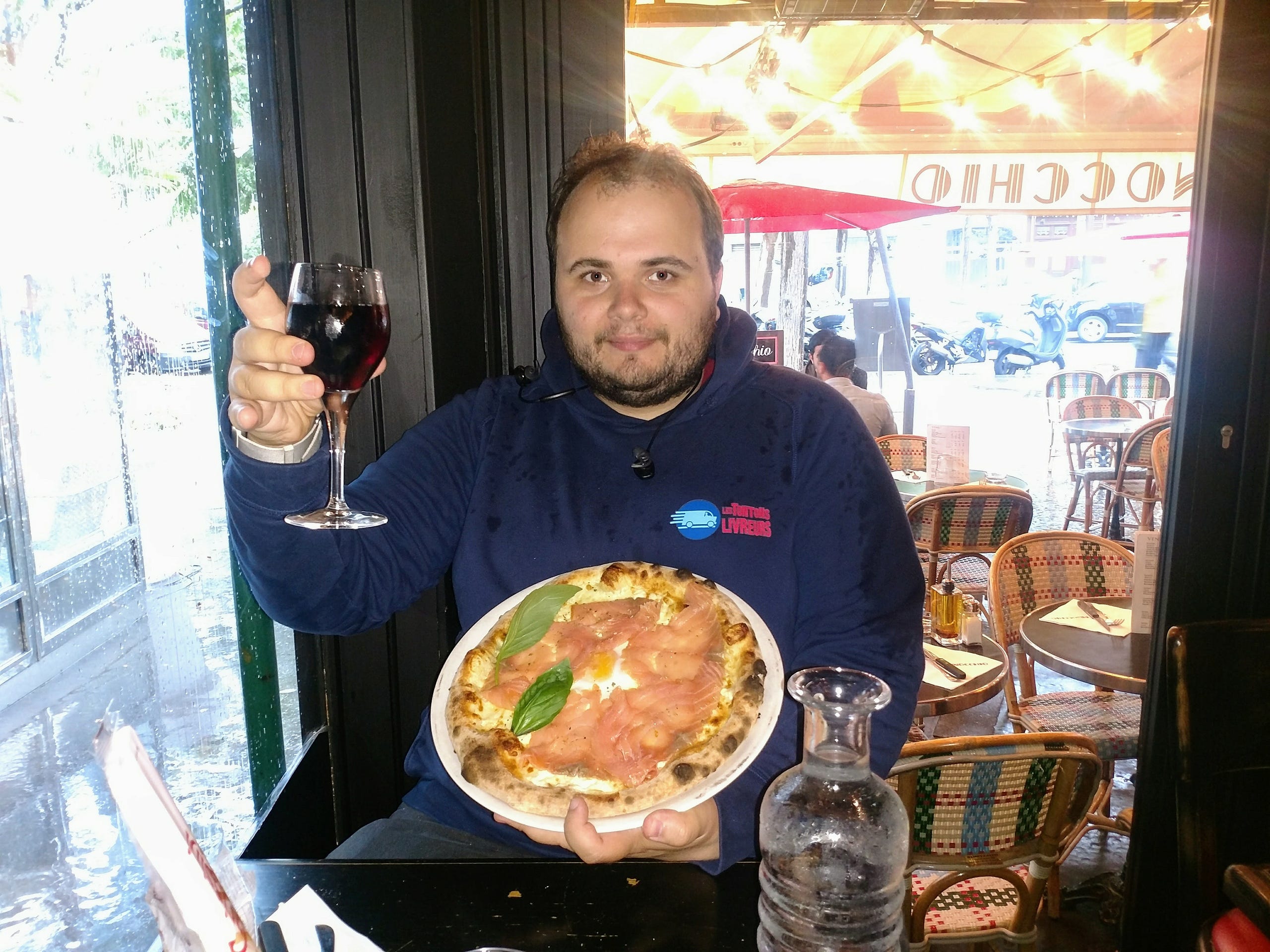
What’s on your pizza ?
Salmon, cream and basil at Pinnochio Paris
A bit about you
There are 3 types of CTO : The MacGyver that can do anything, the top notch coder, and the networker
What’s your background before starting Les Tontons Livreurs?
I first studied computing at SUPINFO and got an engineering degree at UTC. I then moved for about 3 years to the US where I worked for several of the big tech players there.
After seeing a lot of different ways of working and being inspired by great entrepreneurs, I came back with a hunger for entrepreneurship but without an idea, so I went full time in a mobile development agency that I started during my studies — Kalokod.
The last fun fact that I can mention is that I built the iOS app for the presidential campaign of Emmanuel Macron (note: now France’s president).
How did you start Les Tontons Livreurs?
David hired me through Hopwork to work on the first version of the project. He was at that time working with another co-founder. My previous experiences in growing companies in the US helped me be operational quite quickly.
So I started as a freelancer and the second co-founder left a few months later, so I quickly took the co-founder role as well after about 6 months of being a freelancer.
Can you describe what your job is?
Innovating without breaking the existing service. Because we have competitors — and some that raised way more than us — we need to iterate fast. So I’m juggling on that thin line between making sure things are stable enough and making sure we move forward as fast as possible.
We launched a new iOS app last week that’s using our new API endpoints— meaning that we now have 2 APIs versions running in production simultaneously. Decommissioning the older one while take a bit of time, so I need to manage that situation in the meantime.
Since the beginning, on average my job has been about 70% coding, 10% management and 20% networking, cold mailing, VC chasing… Founder stuff!
Has your job changed since the beginning?
Since the departure of the former co-founder, I really took on the CTO role. As a freelance, I was mostly executing as a lead developer, and now I have to really decide what’s going on.
I believe that there are 3 types of CTOS:
- The ‘MacGyver’ who can make wine out of water and basically build anything out of anything
- The top coder who has a really strong technical background, but might lack some other criteria
- The networker who’s really good at keeping up with anything happening in its field
I hope to be somewhere between the last two.
Technical side
We’ve moved our failover servers to a completely different hosting company to avoid facing a full datacenter failure again
What’s your stack, why?
The backend started as a pure PHP/MySQL site without a framework because I had been asked to ship the MVP as fast as possible while still being a freelancer. It took about 4 months to develop the first version of the site.
We now run on a scalable React front-end and a back-end in NodeJS, with MongoDB — running dockerized micro-services.
The mobile apps for the customers are native apps: Swift for iOS — developed by me — and Java for Android — developed by an external agency for now, but we will hire an Android developer as soon as we close our financing round.
For the ‘Tontons’ (note: the delivery professionals) the app is built on top of React native and it’s a private (in house distribution) app — we can iterate much faster on it as it doesn’t have to go through Apple’s review process when we push updates.
We’re running everything from an OVH VPS for now, but we’re currently moving out of this server to a pure cloud infrastructure for redundancy purposes, as we’ve had some troubles in the past.
Naked PHP seems a bit archaic, have you switched everything to NodeJS?
We’ve moved most of our codebase from PHP to NodeJS, but most of our automation tools are still running on PHP — mainly CRON tasks.
Have you ever faced a crisis? How did you solve it?
When OVH’s datacenter died for a full day after a coolant leak and our site went offline. It was a Saturday — one of our busiest days — and the service was completely down, without the ability for us to do anything: we just had to keep waiting.
We had a failover server but it was in the same datacenter! We had planned that our server could be down but didn’t think that the whole datacenter would go dark. So now our NodeJS servers run on AWS with a failover on DigitalOcean to mitigate the risks of a new full outage.
CTO’s decisions
What’s your hardest challenge right now?
Raising funds — our main competitor has raised their Series A but they are burning more cash than we are for now. But we’ll start needing some serious communication expenses quite soon, with Facebook ads, public relations, ads, etc.
For about a month my coding time has dropped to 50% of my time. My co-founder is coming from a big corporation and doesn’t have a lot of connections in the VC and startup world so I have to network a lot more that I used to.
Is there anything you did before that you would want to change now?
I should have spent more time building the first version of the site, and start directly with a strong technology instead of a dirty naked PHP site. It became too heavy after a while and started slowly the development down.
Another mistake I made was choosing Sendgrid to deliver our emails. I had quite a lot of deliverability issues and faced a pretty rough experience with the customer service. We switched to Mailjet, which is a smaller and has better customer support and features for our needs.
The tontons
How does your tech team work?
We work with 2 part-time students in general: there’s always an on-boarding period during which they are not fully productive. They have to take a month to learn React and ES Next, following a few courses on Pluralsight and TylerMcGinnis.
Once they are done with the courses we talk about their mission and we then work in 15 days sprints.
The main thing you are looking for when hiring?
The cover letter is super important for me. If I see a “Dear Sir or Madam”, the whole application goes directly in the trash without further due. I know it’s rough but I want to find people that believe in the project. One of my friends wrote this awesome article : “I never hire fried fish, so stop selling yourself as if you were just that”.
Once the candidate shows up for an interview, I check for a cultural fit. Please don’t show up in a suit, it means that you have no idea how we work. Once the whole personality fit is figured out (about 30 minutes) then we can take the time for a technical test, which lasts a lot longer.
Vision
Where are you going go be in 2 or 3 years?
We’ll have raised between 30 and 40M euros, and will be all operating all over Europe, North America, and Brazil. For now we’re only in France and its direct neighbours.
What are the biggest challenges you’ll face to manage that international expansion?
Scaling the tech architecture, hiring (technical and business roles) and get our name out there. having a great product isn’t enough when you’re not the only player in your field, you need to cover your competitor’s noise.
Another problematic that we’ll face is internationalization, and handling different currencies. We’ll need to open offices in the target countries, etc. Lots to do!
- https://lestontonslivreurs.com
- https://twitter.com/tontonslivreurs?lang=en
- Jobs: https://www.welcometothejungle.co/companies/les-tontons-livreurs
Stay up to date with the pizzas !