Your most precious resource is your engineers’ time — Diarmuid Gill (SVP Product Engineering…
Criteo is a global technology company that serves personalized online display advertisements to consumers on behalf of e-commerce companies. It started trading in the NASDAQ in 2013 after a successful IPO.
- Founded: 2005 by Jean-Baptiste Rudelle, Franck Le Ouay, Romain Niccoli
- Employees: 2700
- Tech team: 600+ (R&D)
- Diarmuid’s team (product development R&D): 200+
What’s on your pizza ?
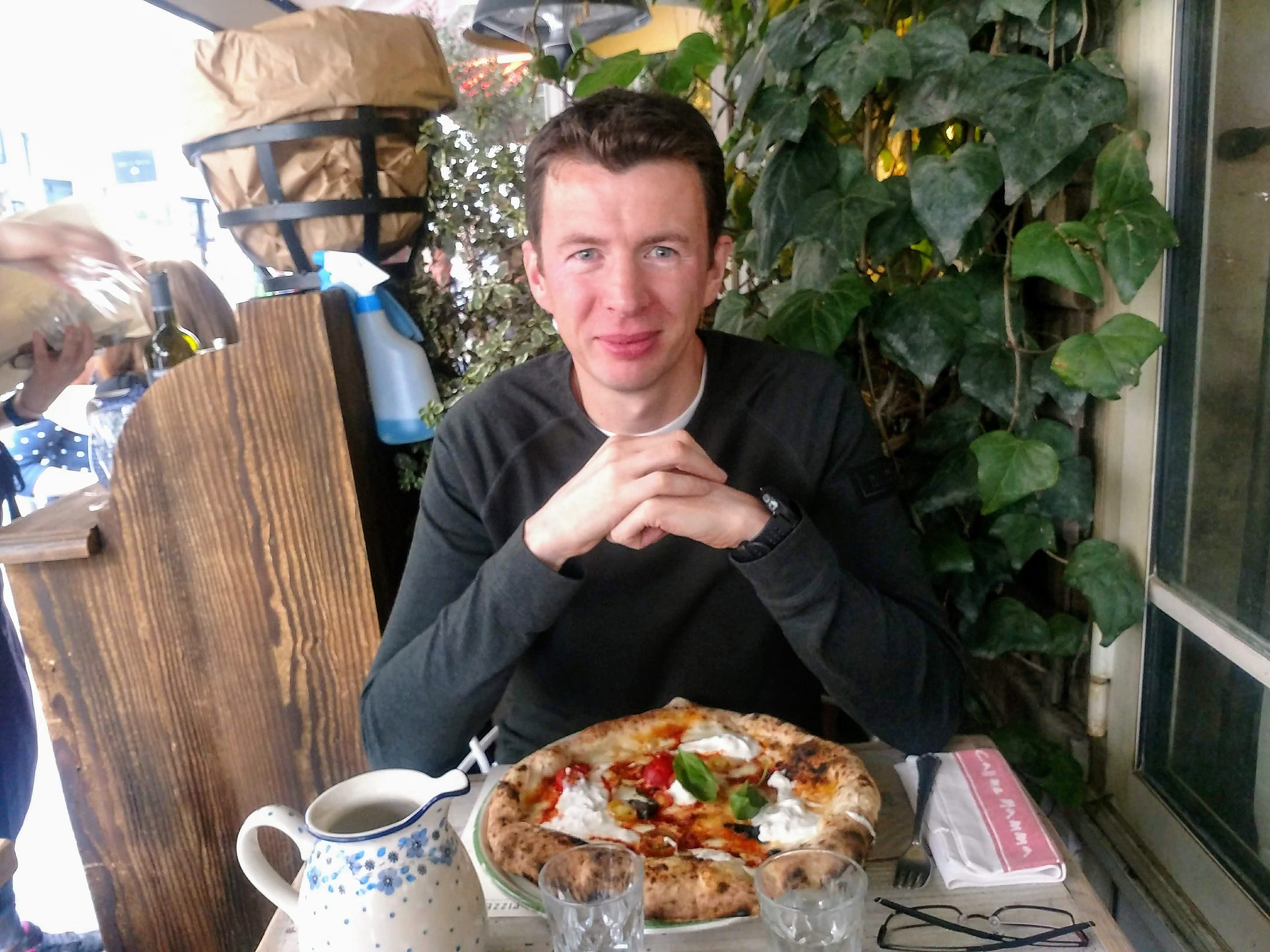
Mozzarella di buffala at Mamma Primi
Background
What’s your pre-Criteo life like ?
I studied Electronic Engineering, and there’s 2 ways you can go from there: hardware or software. There’s a lot more employability when you go the software route, so that’s what I did !
I worked in localization for a while as it was a strong industry in Europe at the time — it has now moved to Eastern Europe and Asia. I then moved to core development and worked for Fujitsu, building middleware. I then joined AOL where I started as a coder for client tools, and moved into tech management of web developers. I worked on a bunch of their social media products, and when AOL bought Bebo we joined the AdTech team.
My wife is French and we wanted our 3 kids to get to know to feel French as much as they felt Irish, so the opportunity to join Criteo was a match made in heaven. We had already decided to make the move to France when I spoke with Dan Teodosiu (Criteo’s CTO) and was blown away by the great tech culture he described in the company: find the smartest people you can and give them everything to succeed without micromanaging. I jumped in.
Right now I’m also helping with recruitment for the product engineering team. We’re trying to hire 150+ people this year for the Product Engineering team! If you increase this team you also need to increase devOps, etc — not linearly of course.
Up to twice a year, we let people do a “voyager” in another team to see if they would want to switch teams or even careers. They have to have enough skills to make sure they can bring something to the new team, and they won’t be a burden to anybody. When somebody moves, they can bring experience, social connections, etc… to another team. It’s great !
The most precious resource you have is your engineer’s time, so I’m here to make sure we use it properly.
Your biggest challenge?
Recruitment, and retention: I need to make sure we don’t have a revolving door! That means providing strong, compelling career paths with freedom, flexibility while keeping the engines moving as fast as possible to deliver new features.
What works for 100 people will not work for 600, and circumstances change all the time.
The one thing that is not an option for us is sitting still. The second you do you will fall behind. There are just too many good competitors. My role is to make sure we keep innovating and move the product forward.
Has your job changed since you started?
Huge. I started as part of the platforms team that was about 30+ people at the time, with a massive growth.
A year ago, we combined the platforms and engine (note: machine-learning focused) teams into one group called “Product Engineering”.
I get to work on something new every 2 months, basically — I’ve never had the opportunity to sit still and have never risked to become stale.
You need to stay technology credible before your team, even if you manage 200 people. You need to understand their challenges, frameworks, etc. So I use my commute time to follow up with everything tech !
What are you searching for in a candidate?
We want to hire a lot without decreasing the quality of the hires, and that all depends on the people conducting the interviews. We have a values-based interviewing system: collaboration, innovation, creativity and communication.
We want people hungry to learn. We put a high value on the ‘geek factor’, people passionate about technology. We want hobbyists, not people who only see tech as a job.
On top of all this, we want to find people that will bring something different to the equation. Diversity becomes really important when you grow, as we don’t want a mono-culture. Sex, age, cultures, industries… We want them all different.
Any tip for startups trying to hire engineers?
Be very methodical during your interviews process. Everyone needs to know exactly what they are checking: culture, algorithms, technical knowledge, etc.
You need to know what the ideal engineer can bring to the table. Culture fit is so important, any interviewer should have veto power if they don’t want to work with somebody.
And one last thing: If you don’t know, you know. Be sure about your hires, the risk is just too high.
Stay up to date with the pizzas !
- Criteo jobs: https://www.criteo.com/fr/careers/
- Diarmuid Gill: https://www.linkedin.com/in/diarmuidg/